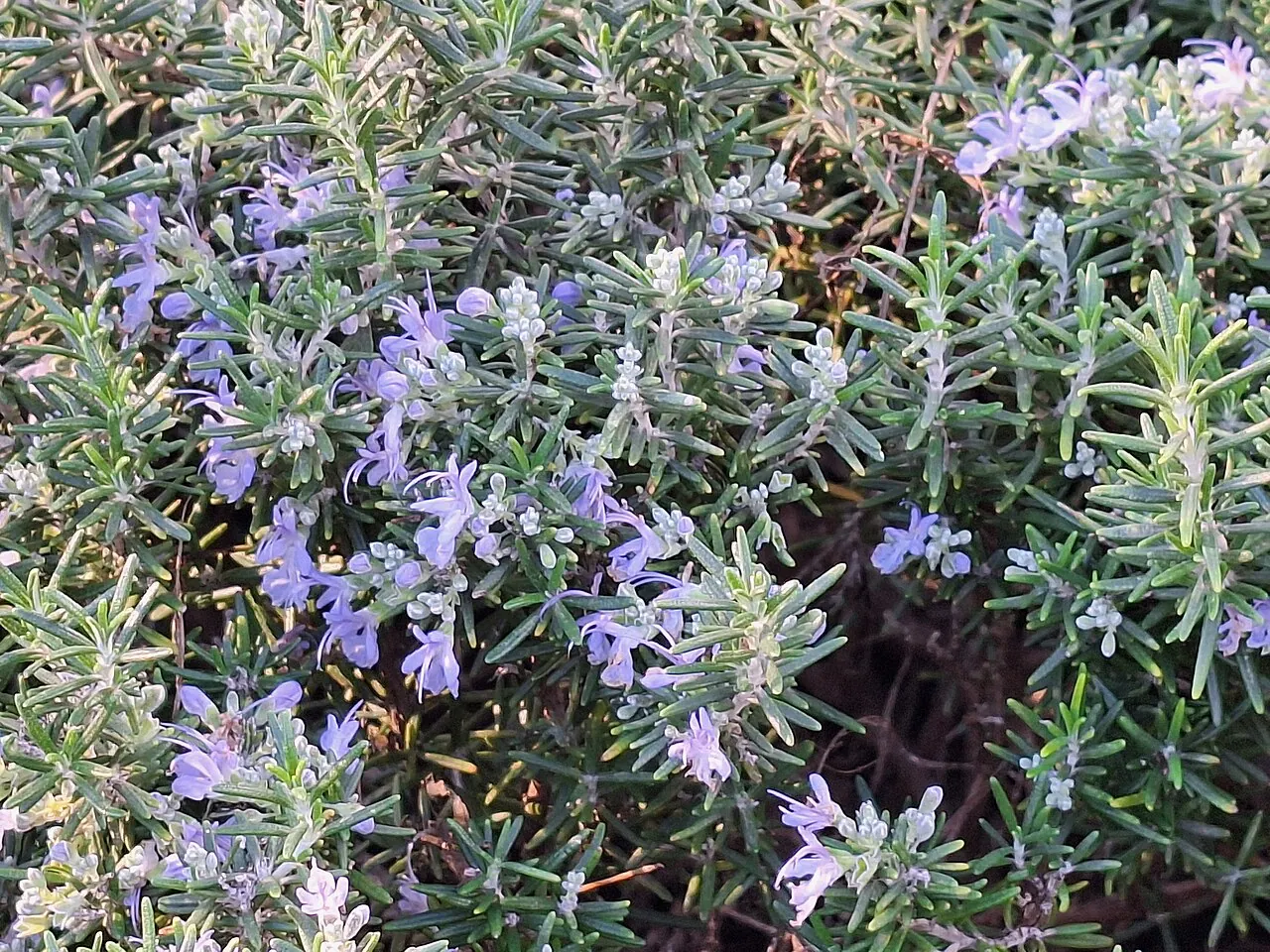

Rosemary is an evergreen herb that can provide fragrant cooking sprigs throughout the year, even in a British winter. The essential conditions are sunshine, freely draining soil and protection from prolonged winter wet. It tolerates some drought once established, but a young plant still needs attention while its roots settle.
You can grow rosemary in a border or a large pot. For a garden with heavy clay, a container is often easier because you control the compost and can move the plant under shelter during very wet or cold weather. A sheltered sunny spot near the kitchen door is useful, provided the pot has drainage holes and isn't left standing in water.
Choose a plant for the space you have
Rosemary is now botanically known as Salvia rosmarinus, although older labels may use Rosmarinus officinalis. Both names refer to the culinary herb familiar from roasted potatoes, bread and many savoury dishes.
There are upright forms that eventually become substantial shrubs and lower, trailing selections that can spill over the edge of a large pot or raised bed. If you want a neat plant beside a path, check its likely size and habit before buying a small specimen. All rosemary may look compact in a nursery pot; it will not necessarily stay that way.
The flavour and scent vary among named forms. Upright 'Miss Jessopp's Upright' is a familiar selection, while trailing varieties can provide decorative growth around the edge of a container. Choose a healthy plant with fresh aromatic leaves, not one already showing widespread dieback.
A young plant or rooted cutting is the fastest route to a useful kitchen supply. Rosemary can be grown from seed, but the Royal Horticultural Society warns that it may take several years before a seed-grown plant is large enough for regular harvesting. Unless you particularly want the seed-sowing challenge, buying one healthy plant is a practical start.
When to plant rosemary outdoors
Spring is a convenient time to plant rosemary in Britain, as the soil begins to warm and the shrub has much of the growing season ahead to establish roots. Garden centres may sell it at other times, but buying a plant in November is not a reason to put it immediately into a soggy, exposed flower bed.
Young rosemary plants raised in sheltered conditions should be acclimatised gradually before permanent planting outside. Protect them from late frosts where necessary, and avoid handling a frozen or waterlogged rootball.
An established rosemary shrub can cope with a fair amount of ordinary British winter weather, but cold tolerance varies with variety and exposure. Wind, damp soil and an exposed container can make winter harder than it would be in a sunny, sheltered border.
If you buy rosemary in late autumn, placing it in a well-drained pot in a sheltered position until spring may be more sensible than planting into heavy clay at the wettest time of year.
Where rosemary grows best
Rosemary is a Mediterranean shrub. It prefers a position that gets plenty of direct sunlight, with soil that drains quickly after rain. The plant does not need an especially rich border. In fact, waterlogged, over-enriched ground is a more likely source of trouble than modestly fertile, gritty soil.
For garden planting, the RHS recommends a light, freely draining position and at least 45cm between plants. Allow more space where a chosen variety becomes particularly broad. If your soil is heavy, a raised bed or a container can improve drainage.
Look at what happens in the proposed planting spot during winter. A south-facing wall can provide shelter, but a downpipe discharging into the soil below it may leave the roots soaked. Similarly, gravel on the surface doesn't automatically fix compacted wet soil underneath.
Do not bury the base of the plant deeply. Rosemary roots need air as well as moisture, so setting the shrub into a suitable growing position is more important than applying large amounts of compost or feed.
How to plant rosemary in a pot
The RHS advises choosing a container at least 30cm wide and deep with plenty of drainage holes. A deep, stable pot suits a shrub that will grow for several years and become heavier as the woody stems develop.
Use peat-free soil-based compost, with horticultural grit mixed in where appropriate. The RHS suggests adding grit up to about 25 per cent by volume to improve drainage. You want a root environment that retains some moisture without turning into a saturated block each winter.
- Check the drainage holes and position the empty pot where it will be easy to water and move.
- Put enough prepared compost in the base that the existing rootball will sit at about the same level it occupied in its nursery pot.
- Ease the rosemary from its original container. Check for severely circling roots and loosen them carefully where needed.
- Place the shrub upright and fill around the sides with compost. Don't cover its lower woody stems with a deep mound.
- Firm the compost gently, then water to settle it around the roots and let the excess drain away.
- Move the pot into a sunny, sheltered position and check moisture during the first few weeks.
A pot sitting within a decorative outer planter needs special attention: empty standing water after heavy rain. Drainage holes in the inner pot cannot help if they are submerged.
How to water rosemary without making the roots rot
Newly planted rosemary needs watering when dry weather prevents its roots from establishing. Once a plant has settled into open ground, it often manages with natural rainfall except in prolonged drought. A container is different: even a drought-tolerant shrub can run short of water when its limited compost dries out in sunshine.
Check below the compost surface rather than watering simply because it is morning. Water a pot thoroughly when it needs it, then allow the excess to escape. Rosemary dislikes constantly saturated compost, particularly when temperatures are low.
If your rosemary is growing in the ground, don't automatically include it in the daily watering round for thirsty vegetables. Inspect the soil and the plant. A damp, shady site is unlikely to become healthier if you keep adding water.
Overwintering is a particular concern. The RHS warns that wet compost can cause root rot, even in comparatively mild winters. A sheltered spot in the rain shadow of a wall may suit a pot better than an exposed patio corner where rain collects.
Feeding and repotting
Rosemary in ordinary garden soil generally needs little or no additional feeding. It is adapted to moderately fertile, well-drained conditions, and abundant soft growth is not the objective.
For a rosemary plant that has spent more than a year in the same container, the RHS suggests a modest application of general-purpose granular fertiliser in late spring or early summer. Follow the label rather than guessing a dose. More importantly, check the condition of the compost and roots when growth begins to slow.
If the rootball has filled the container and the plant dries out too quickly, move it into a slightly larger, stable pot with suitable fresh compost. Avoid burying the original stem base. An ageing, very woody specimen may be easier to replace with a rooted cutting than to nurse through repeated severe pruning and repotting.
Pruning rosemary without exposing bare wood
Rosemary can become woody and leggy if left alone for years. Trim lightly after flowering to encourage a compact, leafy shape. Use clean secateurs and work around the shrub, removing some young shoot growth while leaving healthy foliage below each cut.
Don't treat rosemary as a hedge that can be cut back to the bare trunk and expected to regrow. Old leafless stems often respond poorly to severe cutting. If you are shortening an upright shoot, find the part that still carries leaves and stop above that point.
Some plants flower over an extended period, so choose a suitable moment rather than following a fixed date regardless of the weather. Removing a handful of culinary sprigs as you cook is a mild form of regular shaping, but it does not completely replace inspecting and tidying an older plant.
For a badly overgrown specimen, taking a few cuttings from healthy young growth and growing a replacement may be more reliable than a drastic attempt to shrink the entire shrub.
How to take rosemary cuttings
Healthy young shoots can be used to propagate more rosemary. The RHS recommends softwood cuttings from new growth in late spring or summer, or semi-ripe cuttings during summer.
Take a shoot from a healthy plant and remove lower leaves from the section that will go into the compost. Put the prepared cutting into a suitable free-draining propagation medium. Keep it sheltered, bright and lightly moist while roots develop, but don't leave the cutting sitting in sodden compost.
Once a cutting has formed roots and begun to grow, pot it into an appropriate container and gradually acclimatise it before moving outdoors permanently. Several cuttings give you a better chance of establishing a replacement than relying on one very small piece.
Cuttings are particularly useful if you like the flavour or shape of a named rosemary. They preserve the parent plant's characteristics, unlike seedlings that may differ from it.
Harvesting rosemary for cooking
Rosemary is evergreen, so you can snip useful sprigs at any time of year from a healthy plant. The softer new growth in late spring and summer often has a particularly pleasant flavour.
Cut a small shoot rather than stripping every leaf from an old bare stem. Leave enough leafy growth for the shrub to remain healthy and well shaped. In winter, take lighter pickings from a small or stressed plant.
Use sprigs fresh, or dry them somewhere warm, dark and well ventilated. Once fully dried, remove the leaves and store them in a clean, airtight container. Label the jar so you don't mistake rosemary for another dried herb.
What goes wrong with rosemary?
Brown shoots after winter: Check whether the roots stood in cold, wet compost, or whether the shrub was exposed to unusually hard frost. Cut off clearly dead tips once suitable growing weather returns, but don't cut deeply into bare old wood.
Weak growth in shade: Rosemary needs plenty of light. Move a container to a sunnier spot or consider a more suitable shrub for a permanently dark border.
Wilted foliage: Look at the compost before watering. Dry roots and damaged, waterlogged roots can both affect the plant's appearance; adding water without checking may worsen the latter.
An old bare centre: Regular gentle trimming helps prevent this. A very woody plant that no longer produces vigorous new growth may be better replaced with a young cutting.
Common questions
Can rosemary survive outside in the UK?
Yes, many established plants survive outdoors across much of Britain. Exposed gardens and cold, wet winters create greater risks, particularly for young or potted plants. Good drainage and shelter matter.
Does rosemary need a very large pot?
Start with a stable container at least 30cm wide and deep, as recommended by the RHS. Review the root system as the plant grows rather than assuming one pot size will be suitable indefinitely.
Does rosemary grow back after hard pruning?
Not reliably from old, bare wood. Keep annual trimming within healthy leafy growth and propagate a replacement if the shrub has become severely woody.
Sources and further reading
- Royal Horticultural Society — How to grow rosemary. Varieties, planting, pot sizes, watering, pruning and cuttings.
- Royal Horticultural Society — Herbs in containers. Compost, drainage and winter protection for potted herbs.