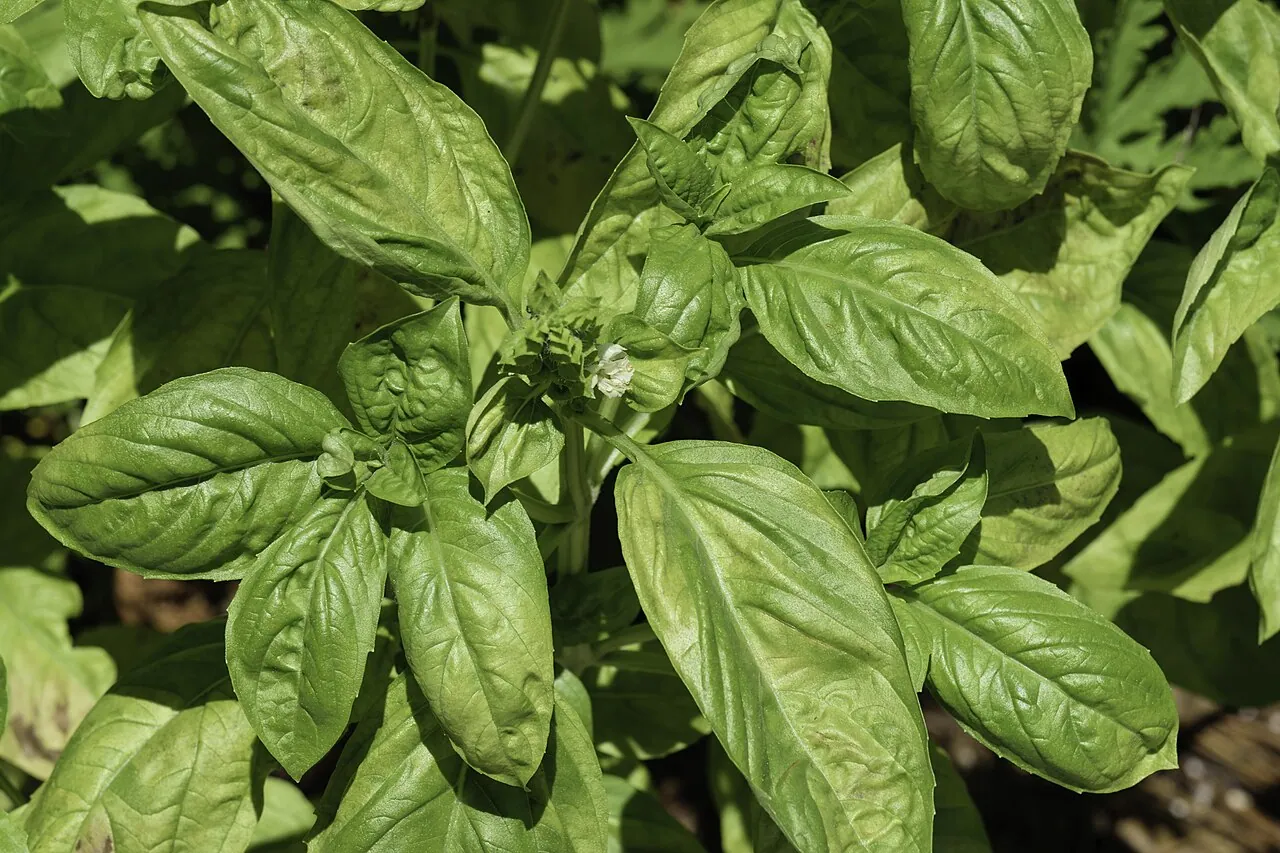

Harvest basil by taking the tips of healthy shoots rather than stripping a plant of all its large leaves. Find a stem with several established pairs of leaves, then pinch or snip the growing tip just above a pair you intend to leave behind. The remaining leaf joints can produce side shoots, making the plant bushier and giving you more to pick later. For a quick meal, you only need a few shoots; for a large batch of pesto, you can take a bigger harvest, but expect the plant to need time to recover.
How to tell when your basil is ready
Look at the plant rather than the calendar. A recently germinated seedling with only its first small leaves needs time to establish. A sturdy basil plant with several pairs of well-developed leaves and fresh growth at the tips is a better candidate for a light harvest.
You don't have to wait for enormous leaves. In fact, repeatedly removing only the biggest leaves near the bottom can leave tall, bare stems with growing tips still stretching upwards. Harvesting the tips is more useful when you want the plant to branch and keep producing.
Check the plant's general condition too. If it is wilted because the compost has dried out, has recently been repotted, or is recovering from cold weather, let it settle before taking much foliage. A healthy plant in active growth will usually cope with careful picking better than a weak one.
Basil is a tender herb. In Britain, outdoor plants normally produce their best crops during warm summer weather. Plants on a bright indoor windowsill may give you a longer picking season, although growth can slow markedly when winter light is limited. Don't force an indoor plant to supply the same harvests in December that it provided in July.
Where to cut basil so it grows back
The important part is the leaf node: the point on the stem where a pair of leaves joins it. On an established basil shoot, you can often see tiny buds forming in the angles between those leaves and the stem. Removing the growing tip above a node encourages those buds to develop into side shoots.
- Choose a healthy shoot. Pick a stem with more than one established pair of leaves. Avoid the smallest, newest shoots on a recently planted or struggling basil.
- Find a pair of leaves you can leave behind. Follow the stem down from its tip until you reach a well-developed pair. There should still be healthy foliage below the point where you plan to cut.
- Remove the tip just above that pair. For a soft young tip, you can pinch it off with clean fingers. For a firmer stem, use clean, sharp scissors. Cut the stem itself rather than pulling downwards on a leaf and tearing the plant.
- Leave the remaining plant leafy. Take small amounts from several suitable shoots instead of cutting one plant back to a collection of bare stalks.
- Give the new shoots time to appear. When fresh side growth develops, you can repeat the technique on those shoots once they are strong enough. There is no fixed number of days: temperature, daylight, container size and plant health all affect the pace.
If you only need a leaf or two immediately, picking individual leaves is fine. The difference is that removing a stem tip above a leaf pair also helps shape the plant for future harvests. Both methods have their place; choose according to whether you want tonight's garnish or another month of productive growth.
You may see advice to leave an exact number of nodes or remove a precise fraction of the plant every time. Treat such figures as rough guidance, not a universal rule. A large, vigorous plant can tolerate more harvesting than a little pot that has barely established.
Picking a little for dinner versus making pesto
For a sandwich, salad or finishing a pasta dish, take a few fresh tips from different parts of the plant. You will get tender leaves and avoid stripping one side bare. If you grow several plants, spread small harvests between them.
A bowlful of pesto needs considerably more basil. The Royal Horticultural Society notes that you can harvest whole plants when a large quantity of leaves is required. That is a different decision from harvesting repeatedly: taking an entire plant gives you the leaves now, but ends that plant's future harvests. If you want both pesto and fresh leaves later, keep some plants growing rather than clearing the lot.
For regular cooking, harvest modestly and often. For pesto, decide whether to sacrifice a plant for one large crop.
A worked example: the basil pot on your windowsill
Imagine a pot of basil in a bright kitchen window. It has several upright stems, healthy green leaves and new tips appearing at the top. You need basil for a tomato salad but want to keep the plant going.
First, check that the compost isn't bone dry and the plant isn't drooping. Choose two or three established shoots with enough leaves left below their growing tips. On each, find a healthy leaf pair and pinch the tip off just above it. Put the picked tips straight into the kitchen rather than leaving them on a sunny sill to wilt.
Rotate the pot occasionally so the plant receives light more evenly, and watch for side shoots developing below the cuts. When those new shoots are established, they become possible harvest points too. If the plant is growing slowly, take fewer leaves until it catches up.
Why supermarket basil behaves differently
Those dense pots of basil sold in supermarkets often contain many young plants crowded together. They're useful for immediate cooking, but the individual plants compete for room, light, moisture and nutrients. That's why a pot can look lush in the shop and then deteriorate after a couple of substantial harvests.
If you mainly want leaves for one meal, pick what you need. If you hope to keep the plant for weeks, consider separating some of the crowded seedlings into individual pots or small groups with fresh, free-draining peat-free compost. Do this gently: teasing apart badly tangled roots can stress the plants, so avoid treating every supermarket pot as though it will separate neatly.
Give the replanted basil warmth and good light, and allow it to recover before harvesting heavily. The RHS specifically notes that crowded supermarket pots are generally intended for short-term picking and may survive longer when divided and repotted promptly. It also recommends keeping supermarket-bought basil in indoor containers to reduce biosecurity risks.
What to do when your basil starts flowering
Basil often tries to flower as the season progresses. If your priority is tender leaves for cooking, remove developing flower stems while they are small. Regular picking of shoot tips can also help keep the plant compact and leafy.
There is another perfectly good choice. Basil flowers provide nectar for insects, so you may want to leave a plant to bloom, particularly if you have several pots and can spare one for pollinators. The flowers themselves are edible, although the flavour is milder than the leaves.
Flowering doesn't mean every remaining leaf becomes unusable overnight. Taste the leaves and decide whether their flavour still suits your cooking. The real question is whether you want to prolong leafy growth or let the plant finish its season and flower.
Looking after basil after a harvest
Put the plant back somewhere bright and warm, away from cold draughts. Outdoors, a sheltered sunny position is preferable; basil is not frost-hardy in Britain. A container is useful because you can move it under cover when conditions deteriorate.
Check the compost rather than watering automatically after every cut. It should remain evenly moist but not saturated. Water at compost level when needed and avoid leaving the roots sitting in water. The RHS recommends watering in the morning where practical and trying not to splash the foliage.
If the plant is producing fresh leaves vigorously, continue with light tip harvests. If new growth is slow, the leaves look pale or the plant wilts despite reasonable watering, sort out its growing conditions before demanding another crop. Harvesting cannot compensate for poor light, cold or exhausted overcrowded compost.
Container-grown basil may benefit from an appropriate balanced feed if nutrients become depleted, but don't assume feeding is necessary every time you pick. The RHS also cautions against potassium-rich tomato feeds when the aim is leafy growth, because they favour flowering.
Keeping freshly picked basil usable
Basil is at its best when you use it soon after picking. Handle the leaves gently and remove any damaged portions. For salads and garnishes, add them close to serving time. The RHS notes that basil can lose some flavour during cooking, so fresh leaves often work well scattered over a finished hot dish.
For a larger harvest, decide on its use before you cut. Pesto is a good option when you have a generous quantity at once. You can also chop basil into prepared sauces or freeze it in portions for cooking later; the frozen leaves will not retain the firm texture of fresh garnish leaves. Label anything you freeze so you can identify it later.
Don't leave picked stems in direct sun or in a hot car while you decide what to do with them. Basil bruises easily, and damaged leaves lose their appeal quickly. A little preparation before harvesting means more of the crop reaches your plate in good condition.
Common mistakes that reduce future harvests
Stripping the bottom leaves: This gives you a handful of basil but may leave a tall plant with little foliage lower down. Take suitable shoot tips for repeat harvests.
Pulling leaves hard enough to tear a stem: Support the shoot with one hand and pinch cleanly, or use sharp scissors. A torn stem is an avoidable injury.
Taking too much from a weak plant: If it has just been repotted, suffered a cold spell or is struggling with water stress, wait for visible recovery before a substantial harvest.
Following the calendar instead of the plant: A fixed weekly harvest schedule makes little sense when basil growth varies with season, light and warmth.
Expecting a crowded supermarket pot to behave like a mature garden plant: Its dense seedlings are often better treated as a short-term crop unless given more space.
Ignoring flower stems: If you want leafy growth to continue, remove developing flowers. If you want nectar for insects, deliberately leave some to bloom.
Questions gardeners commonly ask
Will basil grow back after I cut it?
Usually, yes, provided you leave healthy growth and the plant has suitable conditions. Cutting a shoot tip just above a pair of leaves can encourage branching below the cut. Removing the entire plant is different: you can't expect it to regrow after taking it all.
Should I use scissors or my fingers?
Either can work. Fingers are convenient for soft shoot tips; clean, sharp scissors make a neat cut through thicker stems. What matters is avoiding a tear and leaving healthy nodes and leaves behind.
Can I keep harvesting basil all year indoors?
An indoor plant may live longer than one left outdoors through a British winter, but it's not guaranteed to grow vigorously all year. Short winter days, low light and cool windowsills can drastically slow its growth. Harvest according to the leaves it actually produces.
Can I still use basil after it flowers?
Yes. Sample the leaves and use them if you like the taste; flowering may change their quality, but the plant isn't suddenly poisonous or useless. Basil flowers are edible too.
Sources and further reading
- Royal Horticultural Society — How to grow basil: UK growing conditions, routine tip harvesting, supermarket pots, flowers, watering and culinary use.
- Garden UK — How to grow basil in the UK: additional explanation of pinching growing tips above a leaf pair.