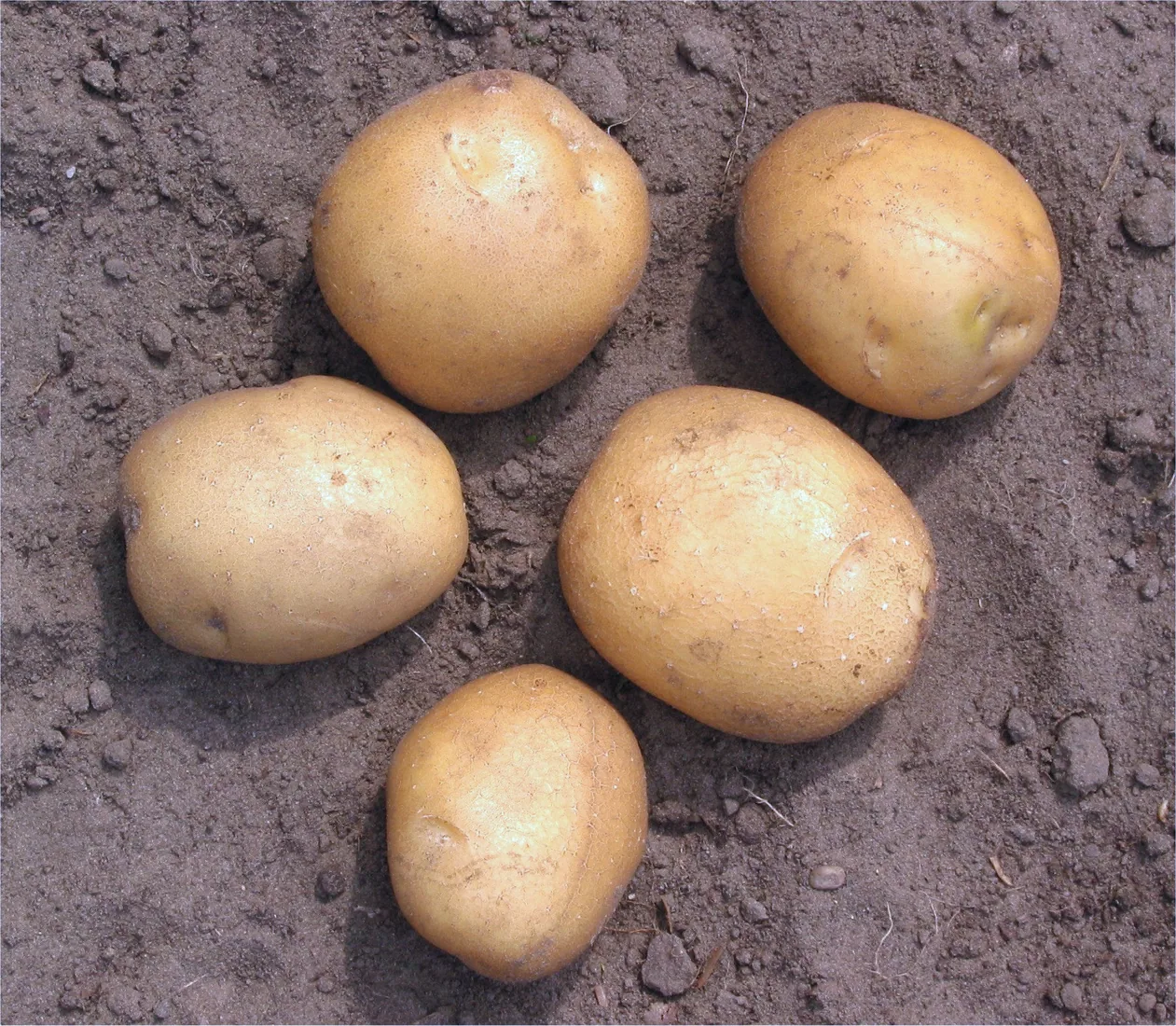
Potatoes last longest when they are kept away from light, heat and excess moisture. A cool, dark, dry place works well, and current Food Standards Agency guidance also says home storage in the fridge is an option if it helps reduce food waste. Whichever method you choose, keep potatoes out of direct light. Light encourages greening, and green, damaged and heavily sprouted parts can contain higher levels of natural glycoalkaloid toxins.
Sort them before storing
Take potatoes out of the shopping bag and inspect them.
Set aside any that are:
- cut;
- bruised;
- wet;
- soft;
- rotting;
- heavily sprouted.
Use lightly damaged potatoes first if they are otherwise sound. One rotten potato can spread moisture and decay through a bag, so do not bury it among the good ones. If potatoes are muddy but dry, brush off loose soil rather than washing them before storage.
Keep them dark
Light turns potato skin green. Greening is a warning sign because the same conditions can be associated with increased glycoalkaloids. Store potatoes in an opaque or darkened container, cupboard, pantry, paper sack or other place shielded from light. Do not rely on a thin clear plastic bag to block light.
Give them ventilation
A completely sealed damp plastic bag encourages condensation and decay. If they come in perforated packaging designed for storage, it can be left as intended. Otherwise, a paper bag, cardboard box, basket or ventilated container is useful. Keep the storage area dry.
Choose a cool place
A cool pantry, cupboard, cellar or other dark area can work well. Avoid locations next to an oven, boiler, radiator or hot-water pipe. If your kitchen cupboards become warm, another part of the house may be better.
Can you keep potatoes in the fridge?
Yes. Older advice often warned against refrigerating raw potatoes because of concern that cold storage increased sugars that could form more acrylamide during high-temperature cooking. The Food Standards Agency has updated its household advice after review of newer evidence. It now says you can choose to keep potatoes either in the fridge or in a cool, dark, dry place. That makes the fridge a useful option in warm homes or when it helps prevent potatoes being wasted.
Keep them dry and inspect them regularly.
Do not store potatoes in standing moisture
Wet potatoes deteriorate quickly. Do not wash a whole bag before putting it away. Wash them when you are ready to cook. If condensation develops in a container, improve ventilation and dry the container. Potatoes stored in a refrigerator should not sit in a wet sealed bag. Moisture encourages soft rot and mould.
Potatoes and onions
Potatoes and onions are often placed together because both are stored in dark cupboards. It is better to give them separate containers with good ventilation. Separate containers help you spot spoilage more easily.
What to do with sprouted potatoes
Check a sprouting potato carefully; firmness alone is not a guarantee of safety. Remove sprouts and green areas thoroughly. Discard potatoes that are extensively green, badly sprouted, soft, shrivelled or bitter. Do not taste raw green potato to decide whether it is safe. The FSA advises cutting off green, rotten and sprouted parts because these areas can contain higher levels of glycoalkaloids.
If a potato has deteriorated significantly, use another one.
Why potatoes turn green
Green colour comes from chlorophyll and shows that the potato has been exposed to light. Chlorophyll itself is not the toxin, but greening can occur alongside increased glycoalkaloids. Moving the potatoes back into darkness does not make heavily green areas suitable again. Preventing greening is much easier than dealing with it later. Use an opaque container and keep it away from bright kitchen light.
Storing new potatoes
New potatoes have thin skins and generally do not store for as long as mature maincrop potatoes. Buy amounts you can use reasonably soon. Keep them cool and dark. Because their skins are delicate, handle them gently and avoid bruising. Check the use or best-before information on packaged products and follow any specific storage instructions.
Storing home-grown potatoes
Allow freshly lifted maincrop potatoes to dry on the surface before long-term storage, but do not leave them exposed to strong sunlight where they can green. Brush off loose dry soil. Do not store potatoes that were damaged by the fork or spade with the sound crop; use those first. Use breathable sacks, trays or boxes. Keep them dark and check the crop every couple of weeks.
Remove anything that starts rotting before it affects neighbouring tubers. Potatoes intended for very long storage need suitable temperature and humidity conditions, so a warm modern kitchen cupboard may not be ideal for an entire winter crop.
How long do potatoes last?
There is no single number. Variety, age when purchased, storage temperature, humidity and damage all matter. A thin-skinned new potato may deteriorate much faster than a cured maincrop potato. Instead of relying on a calendar, inspect them. A good potato should be firm, dry and free from extensive green areas or decay. Rotate the oldest stock to the front and use it first.
Can you freeze raw potatoes?
Raw potato texture changes badly when frozen because of its water and starch structure. For home freezing, cook or parboil potatoes first. The Food Standards Agency says cooked or parboiled potatoes can be frozen. Cool them appropriately, portion them and freeze. Roast or cook them from frozen using a suitable method and make sure reheated cooked potato is steaming hot where food-safety guidance requires it.
Store peeled potatoes
Once peeled or cut, potatoes are no longer a cupboard-storage food. If you need to prepare them in advance, submerge them in cold water in a covered container and refrigerate for a short period. This prevents browning and keeps the exposed surface from drying. For best quality, use them soon. Do not leave peeled raw potatoes soaking at room temperature for hours.
Store cooked potatoes
Cool cooked potatoes promptly and refrigerate them. Keep them covered. Use normal leftover-food hygiene and follow the Food Standards Agency's advice for chilling and reheating. If potatoes have been cooked with meat, dairy, sauce or another ingredient, the storage requirements of the whole dish matter. Do not treat a creamy potato gratin like a bag of raw potatoes.
A simple storage setup
For a normal bag of supermarket potatoes:
- Check them for damage.
- Keep them dry.
- Put them somewhere dark.
- Use a ventilated container.
- Choose a cool cupboard or fridge.
- Check the bag every few days.
- Use older potatoes first.
- Remove green, rotten or badly sprouted potatoes. Potatoes are robust, but they are not inert. Light, warmth and moisture all push them towards sprouting or spoilage. Give them stable dark storage and they will keep far longer with very little effort.
Sources checked: UK guidance on potato storage and acrylamide and Food Standards Agency practical potato safety guidance.