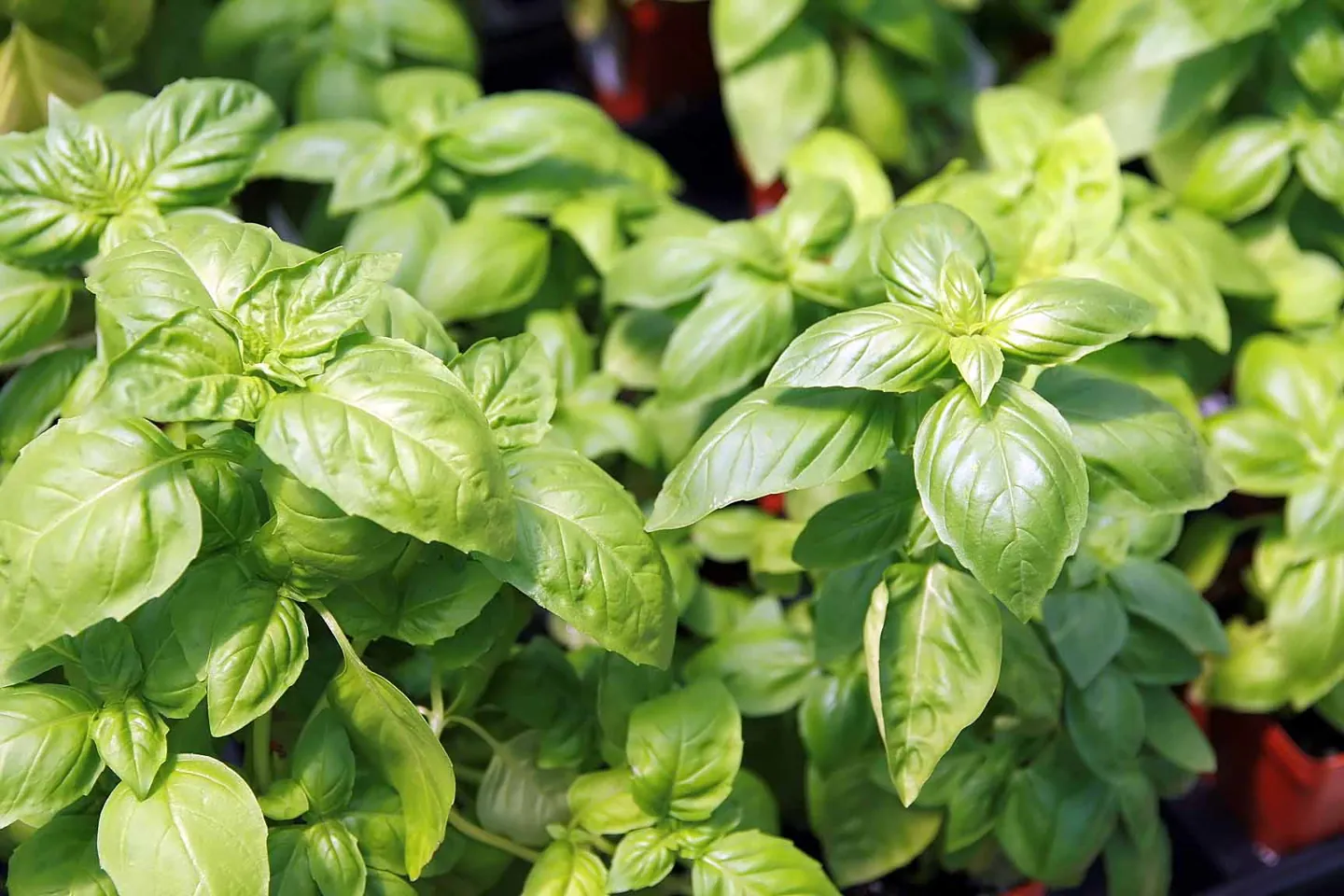
Basil is one of the most useful herbs to keep near the kitchen. A few fresh leaves can change a bowl of tomatoes, a pasta sauce or a homemade pesto, and you don't need a large garden to grow it. The trick in Britain is to remember that basil is a warmth-loving plant. It grows quickly once conditions suit it, but cold nights, soggy compost and a gloomy windowsill can bring an otherwise healthy plant to a standstill.
The simplest method is to sow a few seeds indoors in spring, keep the seedlings warm and then move the plants to a sunny, sheltered position when summer has properly arrived. You can also grow basil indoors, provided it receives enough light.
Choose the basil you actually want to eat
Sweet basil is the familiar choice for pesto and Italian cooking. Thai basil has a different, slightly spicy fragrance that works well in stir-fries, while lemon basil brings a citrus note to dressings and fish dishes. Purple-leaved varieties are attractive, although the colour alone tells you little about flavour. Read the seed packet for the mature size, because a compact variety makes more sense on a narrow windowsill than a vigorous, sprawling one.
Seeds give you far more choice than a supermarket pot. That said, buying a young plant is perfectly reasonable if you want leaves soon. Check that its stems are upright, the leaves are unblemished and the compost isn't saturated. A very dense supermarket pot often contains many seedlings crowded together; separating several small clumps into new pots can help them last longer.
When to sow basil in the UK
Begin indoor sowing in spring when you can provide warmth and good light. A bright windowsill or heated propagator can work, but avoid pushing seedlings into a cold, poorly lit room just because the calendar says spring. The Royal Horticultural Society advises a germination temperature of about 20°C.
Fill a small tray or pot with moist, peat-free seed compost. Scatter the seeds thinly, following the packet's covering instructions rather than burying them deeply. Keep the compost gently moist, not dripping wet. A clear propagator lid can prevent drying out while seeds germinate, but ventilate it and remove it once seedlings are growing.
As the seedlings appear, put them somewhere bright immediately. Thin, pale stems leaning towards the window are a sign that the plants want more light. Turn pots occasionally if they are growing strongly towards one side. Once seedlings have several true leaves, move them carefully into individual small pots or space several plants apart in a larger container.
Planting basil into pots or a garden bed
Wait until the risk of frost has passed before taking basil outside. Even without a frost, cold nights can check its growth. Get young plants accustomed to outdoor conditions gradually over about a week, starting with sheltered daytime exposure and bringing them back inside when necessary. This is called hardening off.
A container is often the safest choice in the UK because it can be shifted to shelter when the weather turns. Choose a pot at least about 20cm wide and deep with proper drainage holes. Fill it with peat-free multipurpose compost, place the plant at the same depth it occupied in its previous pot and water to settle the roots. Don't cram a dozen plants into a tiny space. Air can move more freely between reasonably spaced stems, and leaves are easier to pick.
In the ground, give basil a sheltered position in full sun, with free-draining soil. A south-facing spot close to a wall can be useful, provided the soil doesn't bake completely dry. Heavy, persistently wet soil is a poor choice. In cooler regions a greenhouse or conservatory with adequate ventilation may be more reliable than an exposed vegetable patch.
Keeping basil watered without drowning it
Basil likes regular moisture during active growth, especially in pots, but the roots need air as well as water. Push a finger into the compost before watering. If the surface is dry but the lower compost still feels reasonably moist, another soaking may not be necessary. If the pot has become noticeably light and the compost is drying through, water thoroughly and let the excess drain away.
Never leave a pot sitting indefinitely in a saucer full of water. Water the compost rather than showering the foliage where possible, and try to water early enough that leaves don't remain wet through a cool night. Plants in sunlit containers may need attention every day during hot spells; an indoor plant in a cooler room will generally need less. Judge the plant and compost rather than following a rigid schedule.
Basil in ordinary, reasonably fertile garden soil often needs little feeding. Container plants eventually use up available nutrients, so a diluted liquid feed suitable for edible plants can help during the growing season. Follow the product's instructions rather than applying extra fertiliser in the hope of faster growth.
How to harvest basil so it grows bushier
Don't just strip all the large leaves from the bottom of a young plant. Once the plant is established, take the growing tip from a stem just above a pair of leaves. New side shoots can develop from that point, encouraging a fuller shape. Repeat on different stems as they grow.
Regular picking is much better than leaving a plant untouched for weeks and then taking everything at once. If you need a large quantity for pesto, grow several plants so you can harvest some while the others recover. Avoid removing so much foliage that the remaining stems cannot support healthy growth.
Flower spikes are normal as basil matures, but the plant then directs more energy into flowering and seed production. If your priority is tender culinary leaves, pinch out developing flower buds promptly. You can leave a few flowers for insects if you have enough plants; the choice depends on whether you're growing mainly for the kitchen or for a mixed herb border.
Fresh basil bruises easily. Snip what you need shortly before cooking and add delicate leaves near the end, particularly to hot dishes. For a larger glut, pesto is often a more satisfying way to preserve the flavour than leaving leaves to wilt in the fridge.
Growing basil on a windowsill
A bright window is essential, but glass alone doesn't guarantee good conditions. Summer light can be excellent, while winter days are short and an otherwise warm room may be too dark for vigorous growth. Avoid placing leaves against a freezing pane or above a radiator that dries the compost unevenly.
Check that water can escape from the inner pot if you're using a decorative cover. Rotate the pot and harvest lightly from several stems. If plants become spindly despite appropriate watering, inadequate light is a more likely explanation than a shortage of fertiliser.
Basil can be grown indoors beyond summer, but don't expect the same harvest in a dark December kitchen that you get on a sunny July windowsill. Additional growing light may be needed for sustained winter production.
Common basil problems and what to do
Leaves turning yellow: Check compost moisture and drainage first. Roots in sodden compost cannot function properly, and older leaves may yellow as a crowded plant ages. Inspect the root environment before adding feed.
Leaves with dark patches after a cold night: Move the plant somewhere warmer and sheltered. Basil is unusually sensitive to chilling compared with hardier herbs such as parsley.
Seedlings collapsing near soil level: Damping-off diseases are more likely where seedlings are overcrowded, excessively wet or poorly ventilated. Start again in clean containers with fresh compost and more careful watering if the batch is badly affected.
Holes in outdoor leaves: Examine the plant after dark for slugs and snails. Raised containers and prompt removal of hiding places can help, though no single method prevents every visit.
Lots of flowers, few leaves: Pick the developing tips more often and avoid letting the plant repeatedly set seed if you want a prolonged leaf harvest.
Can you propagate basil from cuttings?
Yes. Take a healthy, non-flowering shoot, remove the leaves that would sit below the waterline and put the stem in a clean glass of water in a bright place. When a useful network of roots has formed, transfer it to a small pot of compost and keep it sheltered while it establishes. Alternatively, root suitable soft shoots directly in moist propagating compost.
Cuttings are handy when you find a variety you particularly like, although they don't solve the problem of insufficient light or winter cold. New plants still need suitable conditions.
Making your harvest last
For a steady summer supply, sow smaller batches a few weeks apart instead of expecting one plant to provide leaves indefinitely. Keep one pot near the kitchen for picking and another growing on. A packet of seeds will usually provide plenty of opportunities to restart if the weather or an early mistake defeats your first attempt.
The essentials are uncomplicated: warmth, bright light, free-draining compost, regular but sensible watering and frequent harvesting. Get those right and basil becomes a rewarding crop even if your entire growing space is a sunny windowsill.
Source
Royal Horticultural Society, How to Grow Basil.