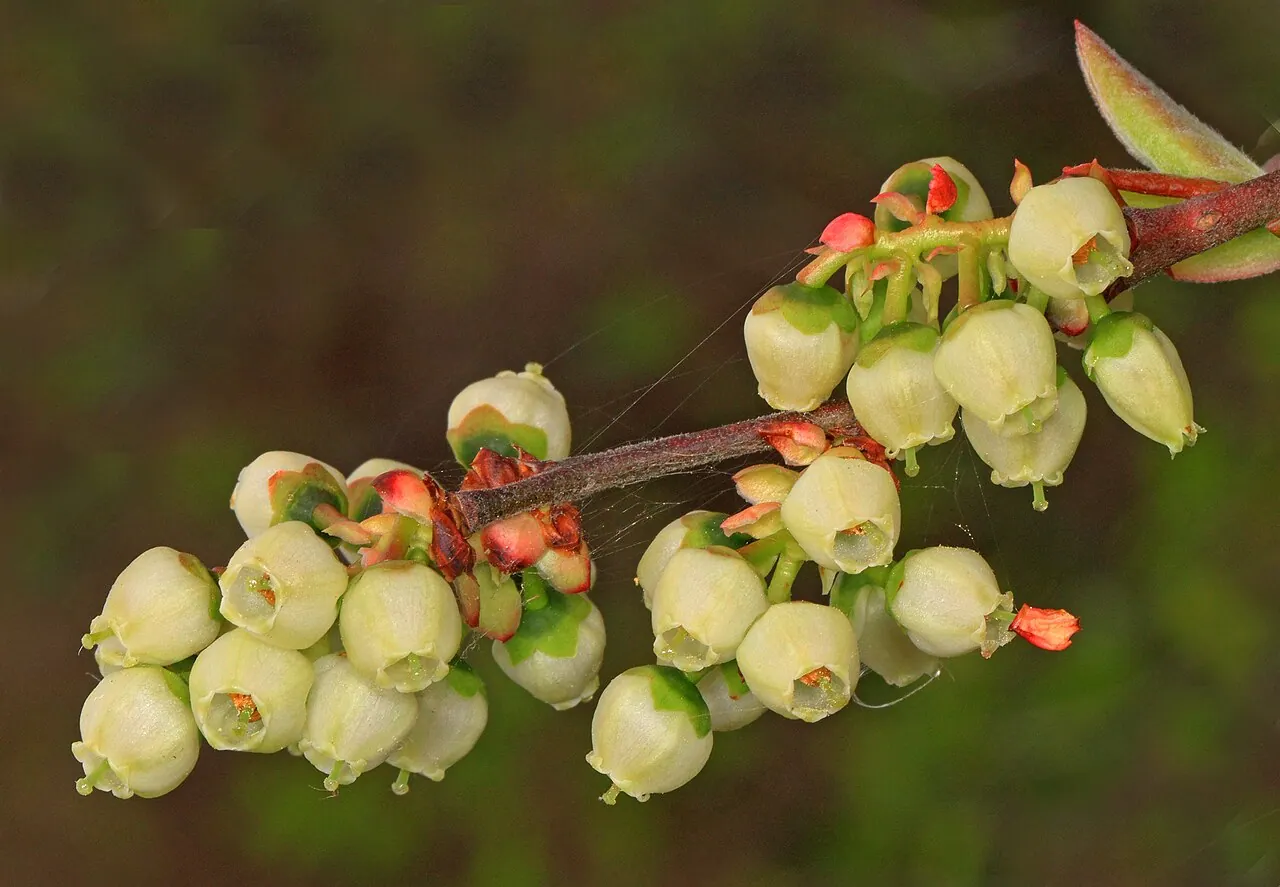

Blueberries are attractive shrubs as well as fruit plants. They produce small white spring flowers, summer berries and often colourful autumn leaves. The most important requirement is unusually specific: blueberries need acidic soil or ericaceous compost, ideally around pH 4.5–5.5. If your garden soil is neutral or alkaline, a large container is usually the simplest solution.
A healthy blueberry bush can crop for many years, so choose a sunny position, manage watering carefully and give the roots the right growing conditions from the start. You'll have much better results than planting into ordinary compost and trying to correct the problem later with fertiliser.
Why blueberries need ericaceous compost
Most everyday garden plants are happy in soil that's only mildly acidic or close to neutral. Blueberries are different. Their roots are adapted to strongly acidic conditions and can struggle to access nutrients when soil pH is too high.
The Royal Horticultural Society gives an ideal soil pH of 4.5–5.5. If you're planning to plant into open ground, test the soil instead of guessing from the appearance of neighbouring flowers.
Where the soil is unsuitable, plant into peat-free ericaceous compost in a roomy pot. This removes much of the uncertainty, although you'll still need to consider the water you use and the compost's condition over time.
Ordinary multi-purpose compost, garden lime and mushroom compost aren't substitutes for ericaceous conditions. In fact, materials that raise pH can make the plant less healthy. If your blueberry develops yellow leaves with green veins, an unsuitable pH may be one possible cause.
Choose a variety suited to your garden
Blueberry plants vary in height, cropping season and suitability for different climates. Some produce early summer berries, while others ripen later. Named cultivars are a more useful starting point than a plant labelled only 'blueberry'.
The RHS recommends varieties such as 'Duke' for colder or more northerly areas, because it flowers relatively late yet crops early. Check the supplier's descriptions and the expected mature size.
Many varieties are self-fertile and can set fruit on their own, but growing more than one compatible variety can improve pollination and extend the harvest. If you have space for two pots, choose plants with overlapping flowering periods.
A young blueberry sold in a small container will not instantly provide huge quantities of fruit. The plant needs time to build a strong framework of branches and roots. It's better to establish one or two healthy bushes than to crowd several into a small bed.
Where to put blueberries
Blueberries crop best with good light and consistent moisture. A sunny position generally produces the sweetest, most abundant fruit, although the shrubs can tolerate partial shade with a smaller harvest.
The site should be reasonably sheltered from strong winds, especially when the bushes are carrying flowers or ripening berries. Containers give you the option to move a plant if your patio turns out to be more exposed than expected.
Blueberries don't like having roots completely dry, but they also dislike permanently waterlogged ground. A large pot with drainage holes gives you control, provided you never leave it submerged in a decorative outer container.
Think about protection from birds before fruit begins ripening. Blackbirds and other birds can discover a crop almost as soon as the first berries turn blue. A fruit cage or carefully secured netting may be needed later in the season.
How big a pot does a blueberry bush need?
For a young blueberry, the RHS recommends a container at least 30cm in diameter. As it grows, move it into a larger pot; a mature bush may need something around 45–50cm across, depending on the plant.
Choose a stable container with open drainage holes. Blueberries can live for years, and a large bush in wet compost becomes heavy. A pot that is easy to manage while the plant is tiny may be less practical when it reaches its mature size.
Use fresh, peat-free ericaceous potting compost. Don't replace it with ordinary multi-purpose compost just because you have a spare bag. Check the label before planting.
Where possible, position the final container before filling it, especially if it will become difficult to move. Keep enough room around it to inspect the branches, water the roots and fit protective netting during fruiting.
How to plant a blueberry in a container
- Check the drainage holes and place the empty pot somewhere stable.
- Add ericaceous compost to the base, leaving enough space for the existing rootball.
- Water the nursery plant if it is very dry, then remove it carefully from its pot.
- Inspect the roots. If they are tightly circling the rootball, tease them gently rather than tearing apart healthy roots.
- Set the plant at its original depth. Keep the crown at about the same level as before, with roots only just covered.
- Fill around the rootball with ericaceous compost and firm lightly.
- Water thoroughly and allow excess to escape through the drainage holes.
- Add an appropriate mulch if wanted, keeping it away from smothering the stem base.
The same broad planting method applies in an acid garden bed, although a bush planted into open ground needs much more room between neighbouring plants. The RHS suggests approximately 1–2m spacing, depending on the final size.
Watering blueberries and managing water quality
Blueberries have relatively shallow roots and need consistent moisture while growing, flowering and fruiting. A container can dry quickly in warm weather, so check the compost below its surface rather than waiting for leaves to wilt.
The RHS recommends using rainwater where possible, particularly in hard-water areas. Repeated watering with alkaline tap water can gradually make an acidic growing medium less suitable. If you have no rainwater, don't leave the plant to dry out: water it appropriately and monitor the compost's pH over time.
Give a thorough drink when needed and let the excess drain away. Never allow a potted blueberry to stand for prolonged periods in a deep saucer full of water.
Mulching the surface with a suitable acidic material can help the compost retain moisture. Keep the mulch away from the base of the stems, and don't use products that are likely to increase the soil's pH.
Feeding blueberry plants
Use a fertiliser suitable for acid-loving, ericaceous plants, following the product instructions carefully. Blueberries can be harmed by excessive feeding; more fertiliser is not a shortcut to larger berries.
The RHS advises feeding container-grown plants periodically through the main growing season, typically from April to August, using an appropriate ericaceous liquid feed. Avoid randomly mixing in garden lime or general soil improvers that could alter the acidity.
If leaves turn yellow, check watering, root health and compost pH before deciding that the plant simply needs stronger fertiliser. Several different problems can produce similar-looking symptoms.
Old container compost eventually loses its usefulness. Review the plant's roots and the potting mix periodically, moving the shrub into a larger container or refreshing appropriate compost as necessary.
Flowers, pollination and summer berries
Blueberry bushes produce small bell-shaped flowers in spring, followed by developing berries. Visiting insects help pollination. Plants with two compatible varieties can sometimes crop better than isolated specimens, although many named varieties are self-fertile.
Watch the fruit as it colours. Blueberries do not all ripen on the same day, so harvest in several small pickings rather than stripping an entire branch at once.
A ripe berry should be fully coloured and come away readily with a gentle touch. A berry that is only partly blue may still need time to develop its flavour. Taste a ripe one and use that to guide the next picking.
Protect the crop from birds when berries start colouring. Use suitable netting or a fruit cage and make sure the covering cannot trap wildlife. Check it regularly and remove or adjust it once harvesting finishes.
How to prune established blueberries
Young bushes generally need very little pruning beyond removing dead, damaged or badly placed shoots. Allow them to develop a good framework first.
As bushes become established and older, pruning helps replace ageing stems with vigorous new growth. The RHS recommends removing some of the oldest, least productive stems from mature plants rather than simply cutting the whole shrub down to one height.
Prune during the dormant season, usually late winter, before strong new growth begins. Look for old, unproductive wood and branches crossing or lying on the ground. Make careful cuts at appropriate points and leave healthy young stems to develop.
Don't remove all the previous season's shoots: these are important for future cropping. If you are unsure, start conservatively, particularly with a young plant that has only recently settled into its container.
Common problems with blueberries
Yellow leaves with green veins: The growing medium may be insufficiently acidic, particularly if the plant has spent years in ordinary compost or been watered frequently with hard water. Test pH rather than guessing.
A small crop: Check the age of the bush, sunlight, pollination and whether it had enough water while flowering. A very young plant may not yet have the framework to carry substantial fruit.
Berries vanish before picking: Birds may be taking them. Use appropriately secured protective netting when fruits begin colouring.
Wilted leaves in a wet pot: Waterlogging may be damaging the roots. Check the drainage holes and outer container before adding more water.
Weak stems and little new growth: Review compost condition, pot size and winter pruning. Severe pruning or overfeeding may worsen the problem rather than fix it.
Common questions
Do blueberries need two plants to fruit?
Many varieties are self-fertile, but a second compatible cultivar can improve pollination and sometimes yield. Check flowering times and the supplier's guidance.
Can I use ordinary compost for blueberries?
No, not as a reliable long-term growing medium. Use peat-free ericaceous compost or suitably acidic garden soil, ideally pH 4.5–5.5.
Will blueberries survive a British winter?
Many varieties are hardy. Container-grown roots are more exposed than roots in open ground, so protect pots where severe cold is expected and avoid leaving them waterlogged.
Sources and further reading
- Royal Horticultural Society — How to grow blueberries. Acidic soil, container sizes, watering, feed, pollination, pruning and harvesting.