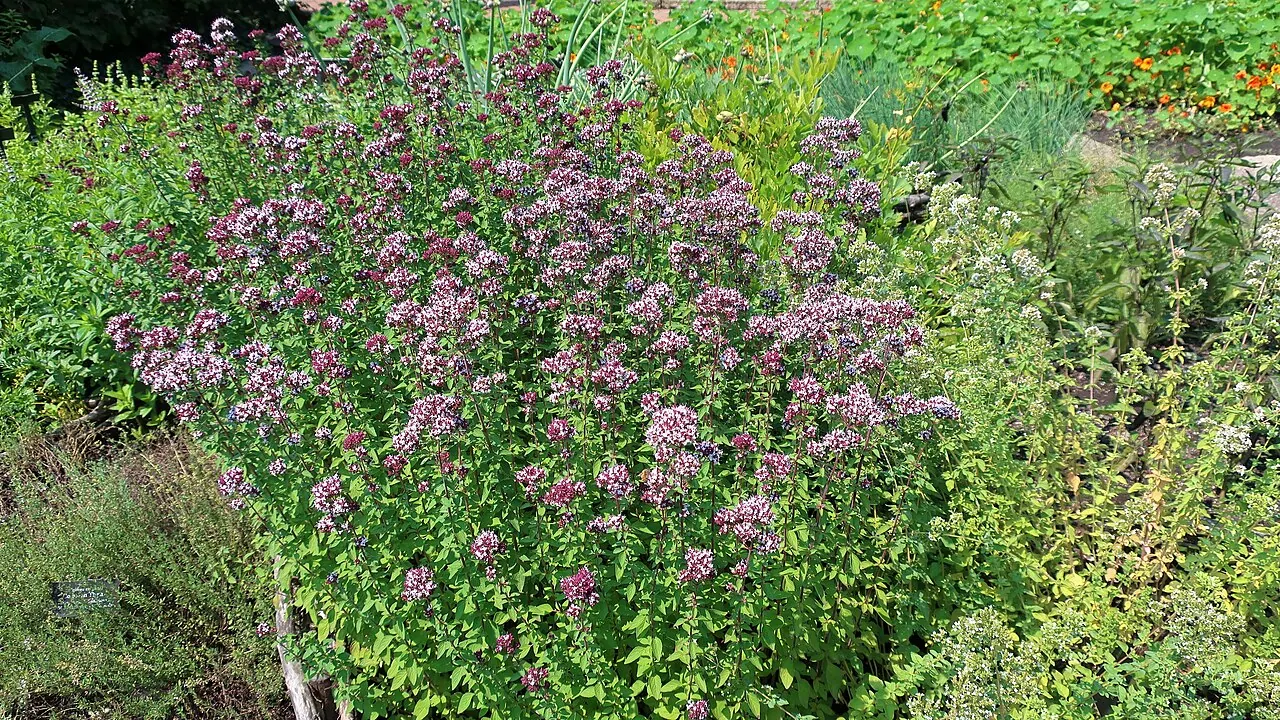

Oregano is a compact, fragrant herb that gives you useful leaves for sauces, roasted vegetables and many Mediterranean dishes. It is also attractive in a sunny border: established plants form low clumps and produce small flowers that visiting bees and butterflies appreciate. The key is to give it as much sunshine as practical, plant into free-draining soil and avoid keeping the roots wet through winter.
You can buy a small culinary plant, start oregano from seed or divide an established clump. For most home cooks, a named plant from the herb section of a garden centre is the quickest route to good flavour. Once settled, ordinary oregano is a perennial that can return for several years.
Oregano or marjoram: what is the difference?
The names are often confused because both herbs belong to the genus Origanum. Common oregano, Origanum vulgare, is sometimes called wild marjoram in Britain. Sweet marjoram, Origanum majorana, usually has a milder flavour and is less reliably hardy outdoors in the UK.
That matters when buying plants. An oregano variety chosen for strongly aromatic culinary leaves is not necessarily the same as an ornamental Origanum bred mainly for colourful flowers and trailing stems.
Smell the leaves before purchasing if you can. Different varieties have noticeably different strengths and scents. Some have green foliage, while others carry golden or variegated leaves. Select a variety intended for cooking rather than assuming that every attractive plant labelled 'oregano' will have the flavour you want.
If you want herbs for pizza or tomato sauces, begin with a robust culinary selection. You can experiment with other types once you know how they perform in your garden.
Where oregano grows best
Oregano prefers a sunny spot with freely draining soil. It suits herb beds, gravel gardens, raised borders and containers. In a very damp, heavy clay garden, growing it in a pot often makes it easier to avoid winter waterlogging.
You don't need exceptionally rich soil. In fact, oregano commonly grows well in modestly fertile ground, and a planting area that stays soggy is far more troublesome than one that is comparatively lean.
An open position encourages compact growth and provides light for the flowering stems. Don't squeeze oregano beneath larger shrubs or vigorous herbs that will cover it as summer progresses.
The Royal Horticultural Society suggests spacing garden-grown oregano roughly 20–30cm from neighbouring plants when setting out young plants. Check the named variety's eventual spread, as some can form substantial clumps.
When to plant oregano in Britain
Spring and early summer are convenient times to plant, once the weather has become reasonably settled. A young plant that spends the growing season developing roots will usually cope better with winter than one put into cold, saturated ground late in the year.
Plants raised indoors from seed should be hardened off before planting outside. Put them in suitable outdoor conditions for increasing periods rather than moving them abruptly from a warm windowsill to an exposed Lancashire garden.
Some oregano species and ornamental selections are less hardy than common oregano. Check the label before expecting every plant to tolerate the same winter temperatures.
If you've bought a plant late in the year, keeping it in a freely draining container in a sheltered place until spring may be more sensible than immediately putting it into heavy, wet ground.
Growing oregano from seed
Oregano seeds are small, so take care not to sow them too deeply. The RHS recommends surface sowing indoors in spring, scattering seeds thinly on moist peat-free seed compost without covering them with a thick layer.
Keep the seed tray or pot warm and bright. A propagator or clear covering can help retain moisture during germination, but remove the cover once seedlings emerge and provide fresh air to reduce problems caused by damp conditions.
The RHS suggests a germination temperature of around 20°C and emergence in roughly one to three weeks, depending on conditions. Avoid leaving the tray on a hot, dry windowsill where the upper compost dries out repeatedly.
When seedlings have several true leaves, move them carefully into small individual pots. Handle them by the leaves rather than squeezing the delicate stems, and keep the compost just moist while they develop.
Growing from seed makes sense if you want numerous plants for a border. If your main aim is a single cooking pot, buying one healthy plant is often simpler and more reliable.
How to plant oregano in a container
The RHS advises choosing a container at least 15cm wide and deep for one young oregano plant, with drainage holes. A larger pot gives you more room for roots as the plant matures and is easier to maintain through dry weather.
Use a peat-free soil-based compost, with horticultural grit mixed in if needed to improve drainage. The RHS suggests up to 25 per cent grit by volume for an appropriate free-draining blend.
- Check that the pot's drainage holes are open and won't sit permanently submerged in an outer container.
- Place a little compost in the base so the plant will sit at its original growing depth.
- Water the nursery plant if it is very dry, then remove it gently from its pot.
- Set the rootball in the centre and fill around it without burying the base of the stems.
- Firm the compost lightly and water to settle it around the roots.
- Allow excess water to run out, then place the pot in a sunny position.
If you have room for several herbs, oregano can share a sunny patio with thyme or rosemary, but it doesn't need to be crowded into one tiny mixed planter. Separate pots make watering and winter management easier.
Watering and feeding established oregano
Water a newly planted oregano during dry weather while its roots establish. Once settled in open garden soil, it usually manages with rainfall unless the weather is unusually dry.
A container needs more attention because compost dries faster. Push a finger beneath the surface before watering and let excess water drain away. Avoid keeping the rootball permanently wet, particularly in winter when growth slows.
Oregano planted in reasonably fertile ground rarely needs additional feed. Where a pot has contained the same plant for more than a year, the RHS suggests a modest general-purpose granular feed in late spring or early summer, applied according to the packet.
If growth is weak, don't automatically give it more food. Check whether the plant has enough sunshine, whether its pot is congested and whether water is sitting around the roots.
Picking oregano for cooking
The main harvesting season is from late spring into autumn. Snip a few healthy shoots at a time, taking the leaves you need and leaving enough growth to keep the plant vigorous.
Leaves are often particularly aromatic before flowers open. Regular light harvesting helps produce a bushier clump, but avoid removing virtually all the foliage from a newly planted or weak specimen.
Fresh leaves are useful in salads, marinades and sauces. For dried oregano, cut leafy sprigs and hang them in a dark, dry, well-ventilated place until fully dried. Strip the leaves from their stems and store them in a clean, airtight jar.
Flowers are also edible, although you may prefer leaving some on the plant for pollinating insects. You don't have to remove every flowering stem simply to keep the herb useful.
How and when to cut oregano back
In late spring, examine established oregano for dead or straggly stems. The RHS recommends trimming to encourage fresh compact growth. Make controlled cuts into healthy sections rather than shearing an entire weakened plant to ground level without checking its condition.
After flowering, remove spent flowering stems if you want a tidier mound. Leaving some flowers is also an option where wildlife value is part of the planting.
Keep vigorous neighbouring plants from growing over the oregano and blocking its light. Fallen wet leaves can collect around a low clump in autumn, so clear material that is smothering the plant's crown.
A plant that has become woody or sparse at its centre may respond well to division when conditions suit. Don't assume that feeding an ageing clump will make it young again.
Dividing and propagating oregano
Oregano can be divided in spring or late summer to early autumn after flowering. Lift an established clump carefully and separate rooted sections, keeping healthy shoots and roots together.
Replant the strongest pieces into suitable well-drained positions or containers, water them in and allow time to establish before severe cold arrives. Discard clearly dead sections rather than putting them back among healthy roots.
Low stems can also root naturally when they touch moist ground. The RHS describes layering as another way of obtaining new plants. Once a stem has developed roots, it can be separated carefully from the parent.
Softwood cuttings taken during summer offer a further route. These methods reproduce the characteristics of a named parent variety more reliably than raising plants from seed.
Getting oregano through a British winter
Common oregano is generally hardy in suitable soil, but winter wet is a more frequent problem than a modest frost. Heavy, saturated soil can damage roots that would otherwise survive cold conditions.
Move container plants into a sheltered, rain-protected position where appropriate, making sure they still receive air and light. A pot left in a deep saucer filled with cold rainwater is at particular risk.
Less hardy varieties may need a greenhouse or other suitable winter protection. Check the plant label rather than assuming all plants sold as oregano can tolerate the same exposure.
Some oregano becomes much less leafy during winter. Wait for spring growth before deciding that a dormant-looking clump has failed, unless the roots and stems are clearly rotten.
Common oregano problems
Brown or blackened stems: Check winter drainage and whether the roots have remained waterlogged. Moving future plants into containers or a raised position may help.
Sparse, weak growth: Review sunlight, age and crowding. A low herb hidden beneath other plants may need a better position.
Spotted leaves: Fungal problems such as mint rust can affect oregano. Identify symptoms properly before discarding or treating the crop.
Leaves without much aroma: Check the variety and growing conditions. Some decorative selections are grown primarily for appearance rather than flavour.
Frequently asked questions
Is oregano a perennial in the UK?
Common oregano is normally perennial and hardy when grown in freely draining soil. Some less commonly grown kinds may require more winter protection.
Can oregano grow indoors?
It can be kept in a bright indoor position, particularly for short periods in winter, but it still needs sufficient light and careful watering. A gloomy kitchen shelf is not an ideal permanent growing position.
Should oregano be allowed to flower?
Yes, you can leave some flowers for pollinating insects. Harvest leaves before flowering when you want their strongest flavour and tidy spent flowering stems later as necessary.
Sources and further reading
- Royal Horticultural Society — How to grow oregano. Sowing, watering, cutting back, winter care, harvesting and propagation.