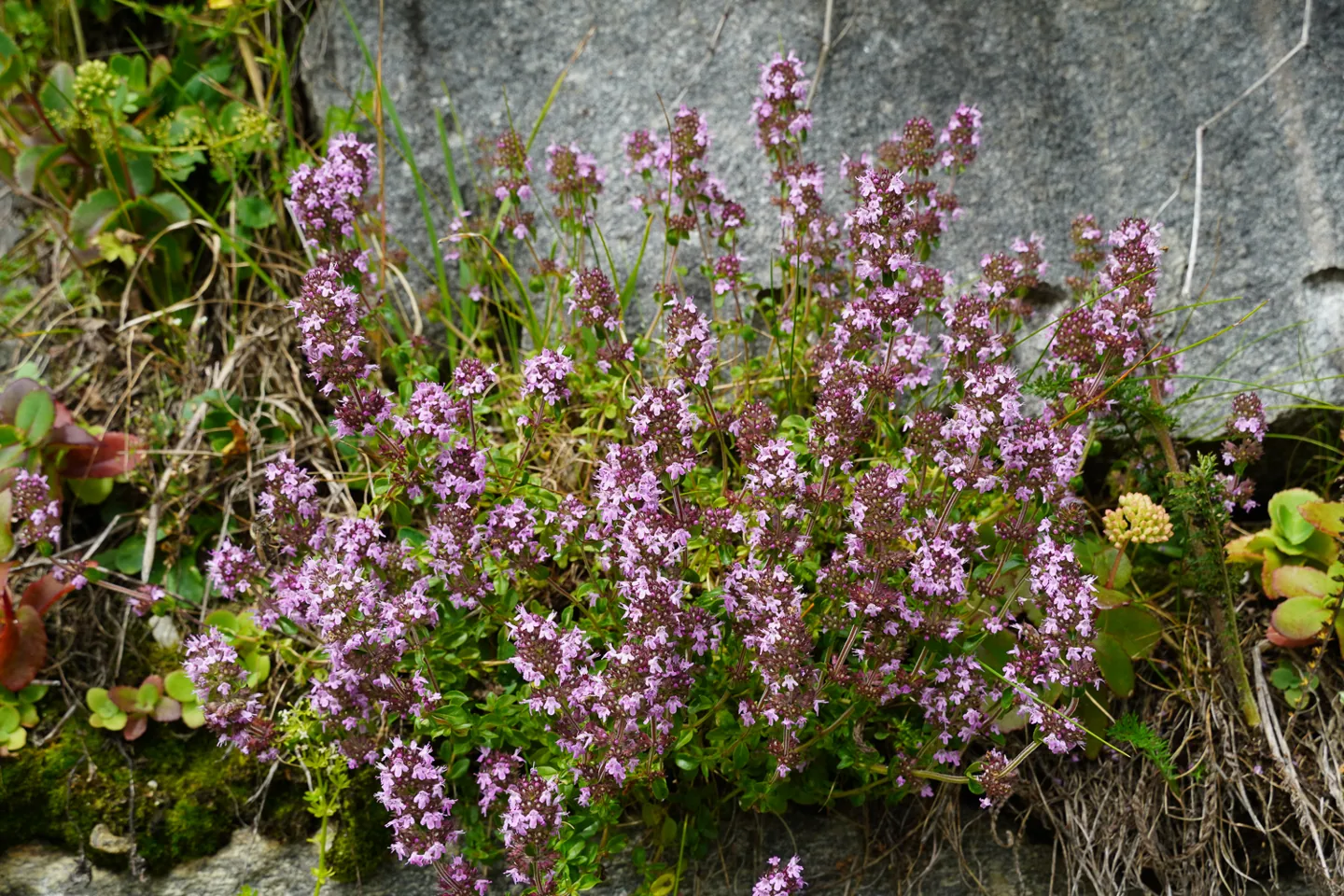
Thyme doesn't need aggressive pruning. In fact, a quick, hard haircut can be the thing that finishes off an old plant. The secret is to trim the leafy shoots while keeping enough green growth for the plant to recover. With common culinary thyme, the goal is a compact, bushy mound that remains easy to pick from throughout the year.
Different thymes have different habits. Common thyme develops little woody branches; creeping thyme forms a low mat. Before reaching for the shears, look closely at what you have. The right cut for a young green plant may be wrong for a ten-year-old specimen with bare stems.
Identify the type of thyme you are cutting
Common thyme, Thymus vulgaris, is the familiar culinary plant with small aromatic leaves and an upright, somewhat shrubby shape. Lemon thyme and other garden varieties may develop a similar outline, although their height and vigour differ. Creeping thymes spread low over soil or paving and are often grown for flowers or ground cover.
Run a finger along a stem. At the tip you will see green leafy shoots, while nearer the base it may become hard and brown. That transition matters more than any rule about removing an exact percentage of the plant.
When should thyme be pruned in Britain?
The Royal Horticultural Society recommends lightly trimming shrubby thyme in mid- to late spring and/or soon after flowering. Those are good opportunities to remove tired tips while there is still growing weather ahead.
Spring trimming makes sense because the plant is coming into active growth. If your thyme flowers during summer, a modest tidy-up afterwards can remove faded flowerheads and improve its shape.
Avoid severe pruning just before winter. Cut stems have less opportunity to produce replacement foliage in cold, wet weather. If an old plant needs major renewal, consider replacing it from cuttings rather than gambling on a radical autumn cut.
Timing is also influenced by your garden. Thyme in a sheltered, sunny courtyard may grow earlier than a plant in a cold, exposed northern bed.
The step-by-step pruning method
Start on a dry day with clean, sharp snips. Look over the plant and remove obviously dead or broken pieces first. If a section is completely brown and brittle, examine whether any green growth remains before cutting it back.
Next, shorten leafy shoots that extend beyond the shape you want. Cut just above a point where healthy green leaves or side shoots remain. Work around the plant rather than slicing blindly across the top.
Stop frequently and look at its outline from a little distance. A thyme plant usually looks more natural as a loose cushion than as an unnaturally square box. Aim for a natural shape.
Don't strip every branch down to bare wood. When finished, you should still be able to see plenty of healthy green foliage across the plant.
Why cutting into old wood is risky
As thyme ages, its lower stems become woody. Unlike some vigorous shrubs, it may not reliably send new shoots from completely bare, old sections. The RHS specifically warns that pruning back hard into old wood is risky because stems may fail to reshoot.
If a twig has living green leaves at its end, preserve some of that leafy portion. Cutting below the last live leaves can leave an unattractive gap that doesn't fill in.
For a very old, straggly plant, conservative trimming is possible, but a young replacement will often give a better result.
This is also why the popular instruction to cut any herb down to a third of its height is not reliable for thyme. The useful boundary is the green growth, not a measurement taken from the soil.
How to prune thyme growing in a pot
Potted thyme often grows over the rim, especially where the light comes from one direction. Turn the pot periodically so it grows more evenly, then trim long shoots while keeping green leaves.
Check the compost and drainage before pruning. If the pot is waterlogged or the roots are failing, the plant may be struggling because of its growing conditions rather than untidy branches.
Thyme prefers full sun and sharply free-draining compost. A soil-based peat-free mix with horticultural grit helps avoid soggy roots. Don't respond to drooping caused by saturated soil by watering even more.
Is creeping thyme pruned differently?
Yes. Low-growing thyme used between stones or at the front of a border generally needs very little pruning. The RHS suggests a light trim after flowering to remove spent blooms, rather than shaping it as though it were an upright shrub.
Trim the flower stalks above the living mat. Avoid dragging garden shears through the plant so deeply that you expose patches of old, leafless stems.
Where creeping thyme has spread over a path, you can carefully edge it back. Leave the remaining growth intact and don't expect cut ends to cover a bare area instantly.
Can kitchen harvesting replace pruning?
Regularly taking small young sprigs for cooking helps keep common thyme compact. Snip leafy shoot tips rather than repeatedly tearing out individual leaves from the same stalk.
Fresh spring and summer growth usually has the best texture and flavour, but thyme is evergreen and usable leaves can be picked throughout the year. During winter, take small amounts so the plant isn't left bare when it is growing slowly.
A good kitchen harvest removes enough of the soft tips for your recipe without leaving the entire plant looking stripped. If you are gathering a large amount to dry, spread your cuts among several branches.
Flowers are also aromatic and edible on culinary thyme. You can leave some for bees before giving the plant its post-flowering tidy-up.
What to do with a very old thyme plant
Older thyme may form a woody centre with green shoots only around the outside. You can try gentle trimming, but hard pruning is a gamble. Take cuttings from healthy, non-flowering shoots while the plant is still producing them, or buy a fresh plant.
If you want an identical replacement of a named variety, vegetative propagation is more dependable than saving seeds. Seedlings may not look or taste exactly like their parent.
Plant replacements in a sunnier, better-drained spot if the old thyme suffered from winter wet. One of the worst places for this Mediterranean herb is heavy ground that stays cold and saturated for months.
It is perfectly reasonable to regard tired thyme as a plant to renew every few years rather than forcing it to live indefinitely.
Common mistakes and how to correct them
The plant turned brown after a haircut. You may have cut below its live leafy growth. Wait for signs of recovery without soaking the compost, and consider starting a replacement.
A thyme plant keeps becoming leggy. Check whether it gets enough sun, then trim green tips regularly in suitable weather. Deep shade is rarely solved by extra pruning.
The plant looks healthy on top but dies in winter. Poor drainage and excessive moisture may be the underlying issue. Gritty compost, raised beds and sheltered positioning are more useful than cutting harder.
Flowering has finished and stems look untidy. A light trim of spent flower stems is usually enough. Save major reshaping for a healthy plant in active growth.
Thyme responds best to small, thoughtful cuts. Leave green growth on each branch, treat old brown stems with caution and give the plant the sunny drainage it needs. An ordinary trim should make it easier to harvest, not leave you wondering whether it will survive.
Source checked
Pruning dates, the old-wood warning and the distinction between shrubby and creeping thyme were checked against the RHS guide to thyme.