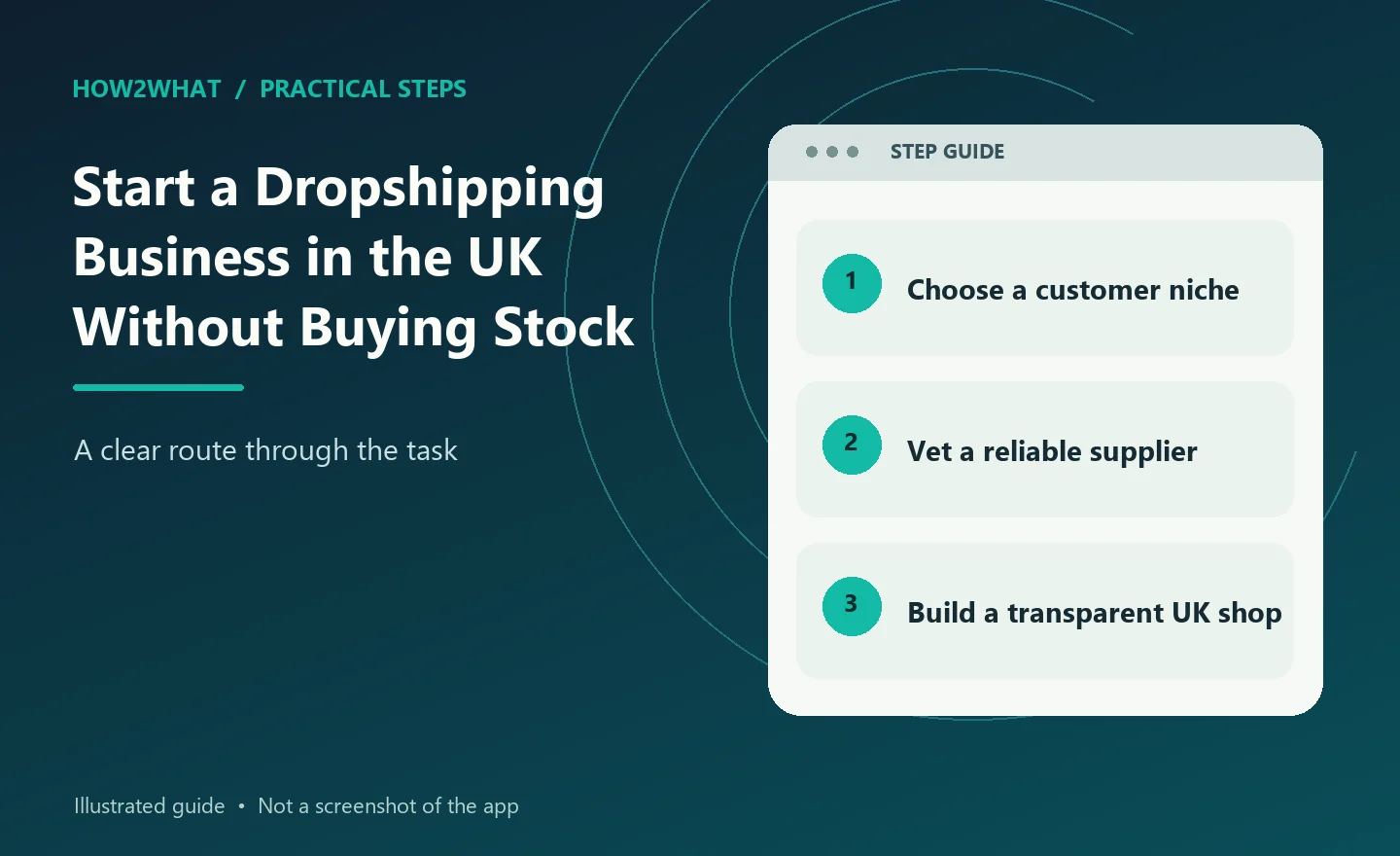
Dropshipping is a retail model in which you sell a product without keeping that product in your own stock. When a customer orders, you pass the order to a supplier and the supplier sends the item directly to the customer. That removes the need to buy a warehouse full of inventory, but it does not remove the responsibilities of running a retail business. You still need to choose products, check suppliers, price properly, answer customers, manage refunds and comply with the rules that apply where you sell.
The easiest part is opening a store. The harder part is finding something worth selling and a supplier you can trust.
Decide whether dropshipping suits you
Dropshipping works best for someone happy to focus on:
- product research;
- merchandising;
- website conversion;
- customer service;
- content and marketing;
- supplier management.
You have less control over stock quality, packing and dispatch than a retailer that holds inventory. Margins can also be tight because competing shops can source the same product from the same supplier. If your entire plan is "copy a viral product, run ads and make passive income", the business is fragile before it starts. Treat dropshipping as retail, not as a shortcut around retail.
Choose a market before choosing products
Start with a group of customers and a problem or interest, not a random catalogue. A focused shop is easier to understand and market than a site selling pet brushes, kitchen gadgets and phone cases on the same page.
Look for a market where you can add value through:
- better product selection;
- useful buying advice;
- clear comparison content;
- faster or more reliable delivery;
- better customer support;
- a recognisable brand.
Avoid products where safety, legal compliance or authenticity is hard to verify. For a new seller, complicated electrical goods, children's safety products, supplements and heavily regulated items create far more risk than simple household or hobby products.
Research demand
Use several signals. Look at Google Trends for whether interest is rising, stable or seasonal. Check search results to see who already ranks for the products. Look at major marketplaces to understand pricing and review patterns. Read Reddit, forums and product reviews to find complaints that current sellers are not solving. Search social platforms for the language customers use, but do not mistake a short-lived viral spike for durable demand.
You want evidence that people buy the category, not merely watch videos about it.
Research competitors
Make a simple spreadsheet.
Record:
- the main competitors;
- product range;
- pricing;
- delivery promises;
- returns policy;
- review reputation;
- website quality;
- organic search presence;
- social activity;
- obvious strengths and weaknesses.
Do not copy their wording or design. The point is to understand what customers already have available and decide why your shop deserves to exist. If ten established stores offer the same item for less money with faster delivery and thousands of reviews, you need a very good reason to enter that exact fight.
Find suppliers carefully
A supplier is effectively part of your customer service team even though the customer may never know its name.
Check:
- actual dispatch times;
- delivery countries;
- tracking;
- stock accuracy;
- product quality;
- packaging;
- returns process;
- communication speed;
- damaged-item handling.
Order samples yourself. Do not rely entirely on catalogue photos and supplier descriptions. A sample lets you inspect the product, photograph it, test packaging and measure how long delivery really takes. If a supplier will not answer basic questions before you start sending orders, that is useful information.
Understand your numbers
The supplier's product price is not your total cost.
A realistic order can include:
- product cost;
- supplier shipping;
- payment-processing fees;
- ecommerce platform costs;
- app fees;
- returns;
- refunds;
- replacement orders;
- customer support;
- advertising;
- taxes where applicable.
Calculate margin after those costs. A product bought for £10 and sold for £20 does not necessarily make £10 profit. Keep a spreadsheet or accounting system that shows contribution margin per order. If the numbers only work when there are no refunds and advertising is almost free, the numbers do not work.
Set up the business properly
Your legal and tax obligations depend on where you operate and where your customers are. In the UK, decide on the appropriate business structure and understand the record-keeping, tax, consumer-rights and data-protection obligations that apply to you. Do not copy a US legal template and assume it covers a UK store. Set up separate business records from the beginning. Keep invoices from suppliers and records of sales, refunds and expenses.
UK sole traders generally need to register for Self Assessment if their trading income exceeds £1,000 in a tax year; separate VAT or other rules may apply. Use GOV.UK or a qualified adviser to confirm your own circumstances.
Build a store people can trust
Your website needs to answer the questions a customer would ask before giving a new retailer money.
Include:
- clear product descriptions;
- original or genuinely representative images;
- delivery estimates;
- returns information;
- contact details;
- privacy information;
- terms where required;
- secure checkout;
- an obvious way to get help.
Do not copy the supplier's generic description word for word. Write product pages around the customer's decision: size, materials, compatibility, limitations, use and what is actually included. Never claim delivery is "2-3 days" if the supplier usually takes two weeks.
Price for reality
Set a price that covers normal business friction. Cheap commodity products can be difficult because customer-service time becomes expensive relative to the order value. Very expensive products create larger refund and chargeback exposure. The useful middle ground depends on the category. Test pricing, but do not hide mandatory charges until checkout. If customers routinely discover unexpected shipping or tax at the final step, conversion suffers and complaints rise.
Create your own product content
Supplier images are often used by dozens of competing shops.
If possible, order the product and make your own:
- photos;
- short videos;
- measurements;
- FAQs;
- demonstrations;
- comparisons;
- instructions.
This improves the store and helps organic search because you are adding information instead of republishing the same catalogue feed as everyone else. It also forces you to understand what you sell.
Get the first customers without burning money
Paid advertising is one option, not the definition of dropshipping.
Organic routes include:
- useful search content;
- short product demonstrations;
- niche social accounts;
- email from genuine subscribers;
- community participation;
- creator partnerships;
- product comparison pages.
Start with channels you can measure. Do not spend heavily merely to prove a product has demand when you have not yet checked conversion, supplier reliability and margin. The first objective is learning what customers respond to, not creating impressive revenue figures with no profit behind them.
Have a returns plan
You are the retailer from the customer's point of view. For most non-exempt online purchases, UK consumers have a legal right to cancel within 14 days of delivery, with separate rules about returns and refunds. Your supplier agreement cannot remove those customer rights. Do not tell an unhappy buyer to negotiate with an unknown overseas supplier.
Know in advance:
- where returns go;
- who pays return postage;
- what happens with damaged goods;
- how refunds are processed;
- how long supplier claims take.
Build those costs into the business. A supplier with a cheap product but an unusable returns process can be more expensive than a better supplier charging slightly more.
Sources checked: www.shopify.com, www.gov.uk, www.gov.uk.